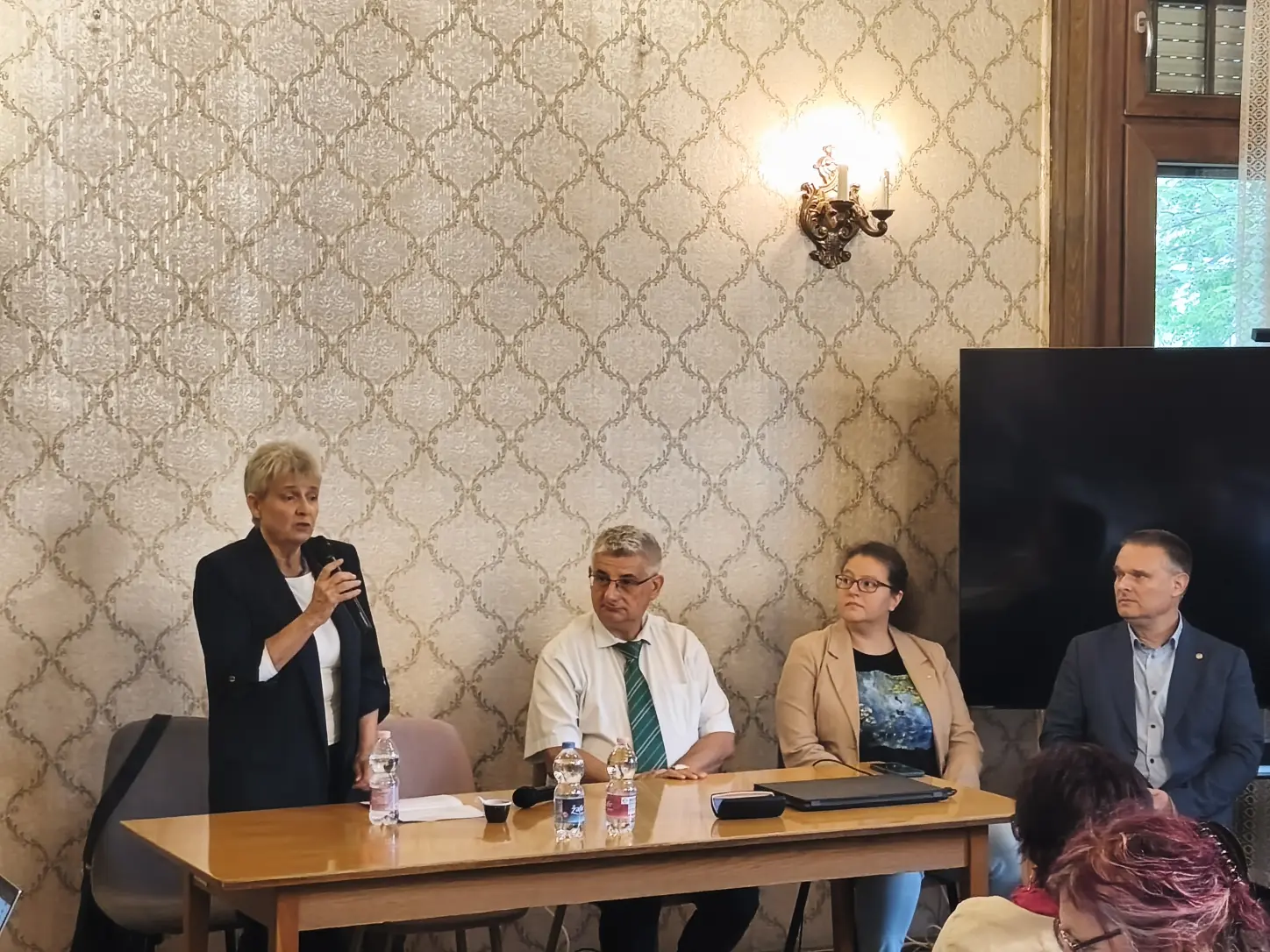
PSZ Congress welcomes dialogue with new Hungarian Minister of Education and calls for concrete reforms
By Agnes Roman, based on reports of Tamas Totyik, President of PSZ
The 44th Congress of the Hungarian teachers’ trade union PSZ (Pedagógusok Szakszervezete) and its President Tamas Totyik welcomed that the newly appointed Minister of Education and Children’s Affairs, Judit Lannert, met with the teachers’ trade union among her first official actions. This gesture was seen as an important signal that the new TISZA government intends to prioritise dialogue with the profession and its representative organisations.
PSZ positively assessed the establishment of a standalone Ministry of Education and Children’s Affairs, considering it a strategic step that reflects a stronger political commitment to the sector. The union also expressed support for the Minister’s vision of a more humane, child-centred education system spanning all levels from early childhood education to higher education, which aligns with PSZ’s long-standing proposals.
The Congress noted that many of the Minister’s announced priorities correspond with the union’s own recommendations. In particular, PSZ welcomed plans to strengthen sectoral social dialogue, reduce administrative burdens on teachers, improve the situation of education support staff through salary increases, and grant more autonomy to school leaders by restoring employer rights at institutional level. Positive elements also include intentions to revise the teacher performance evaluation system, liberalise the textbook ordering system, and prepare a comprehensive review of public education and child protection, as well as reforms to the in-service training system.
At the same time, PSZ emphasised that key issues remain to be addressed and expects further concrete measures from the government. These include the need for a comprehensive wage correction for teachers, compensation for the loss of jubilee bonuses, and the immediate abolition of the current school inspection system. The union stressed that without tangible improvements in working conditions and remuneration, systemic challenges in the sector will persist.
Looking ahead, PSZ underlined that from September onwards, structured consultations should begin on major reforms, including the development of a new National Core Curriculum, responses to demographic changes, and a rethinking of the school maintenance and governance system. The union reiterated that such reforms must be based on genuine social dialogue and involve education stakeholders at all stages.
The Congress also took note with cautious optimism of the Minister’s stated intention to restore trade union rights and the right to strike, highlighting that these are essential for meaningful social dialogue and the protection of workers’ interests.
In addition, PSZ called for responses to several long-standing issues, including the situation in special education methodology institutions and the working conditions in correctional education facilities, where staff continue to face uncertainty.
Overall, PSZ expressed its readiness to engage constructively with the new government, while underlining that expectations remain high. The union reaffirmed its commitment to contributing to the development of a modern, inclusive and child-friendly education system, and called for an institutionalised partnership with the government to ensure that reforms deliver real improvements for teachers and learners alike.