ETUCE workshop in Dublin strengthens union action on AI and collective bargaining in education
On 12 May 2026, ETUCE brought together education trade unions from across Europe in Dublin for a workshop on collective bargaining on artificial intelligence-related issues in education. The meeting, organised in the framework of the project Balancing AI in Edu, co-funded by the European Union, focused on how unions can build power, expertise, and coordination to shape AI-related rights in education and ensure that teachers remain in control of their work.
Opening the workshop, ETUCE President John MacGabhann stressed that AI must serve education and not undermine democratic values, professional autonomy or national education systems. Irish union leaders highlighted the importance of teacher-led approaches and using existing policy and curriculum discussions as entry points for addressing AI through social dialogue.
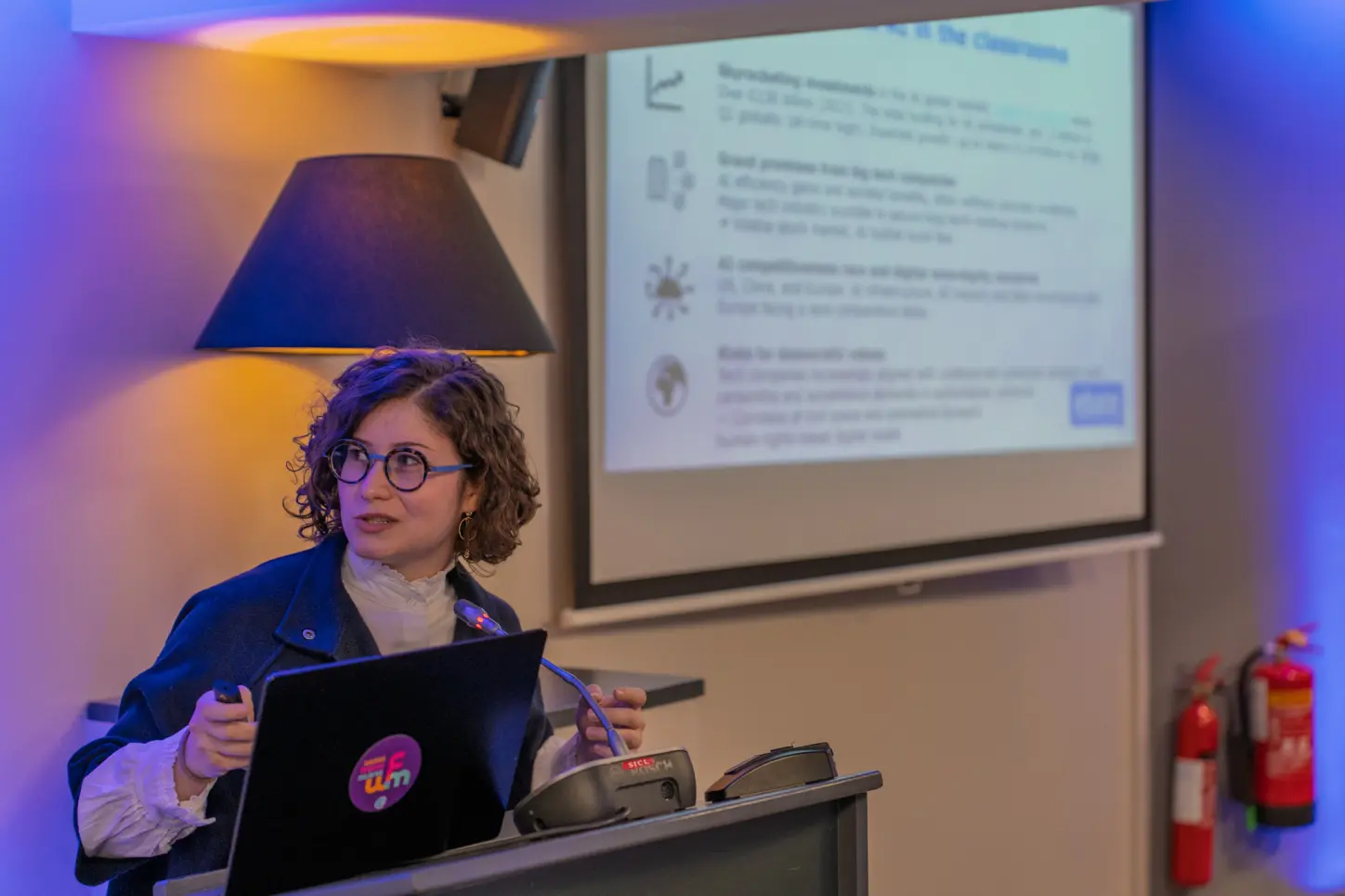
ETUCE Policy Coordinator Martina Di Ridolfo presented an overview of current developments, underlining that AI systems are already being used in high-risk areas such as grading, assessment and learning management, often without sufficient social dialogue. Participants discussed concerns around data protection, workload, public investment choices, and the impact of deregulation initiatives such as the Digital Omnibus.
Union strategies and national experiences
A central panel showcased concrete union experiences from across Europe. In France, SNES-FSU presented how the union applies a precautionary principle to AI in education and develops its own positions, training and internal capacity before engaging with government initiatives. In Iceland, the Icelandic teachers’ union gave some updates on the Icelandic AI pilot project and a comprehensive union policy covering professional autonomy, workload, training, language and culture, consultation, and equity and inclusion. The Icelandic example illustrated how teachers can lead AI implementation when supported through social dialogue, paid time and structured collaboration.
The Educational Institute of Scotland shared how international cooperation at the International Summit on the Teaching profession led to the negotiation of national guardrails and guidelines on AI use in education. These safeguard teachers’ professional judgement, set clear limits on data use, and place student well-being at the centre. The Scottish case also highlighted the importance of alliances with parents and wider society to counter narratives presenting AI as a simple solution to complex education challenges.
From Sweden, the focus was on AI as a work environment and organisational change issue. The Swedish Teachers’ Union emphasised early union involvement, social dialogue and the need to address risks linked to algorithmic management, workload and health, particularly in decentralised education systems.
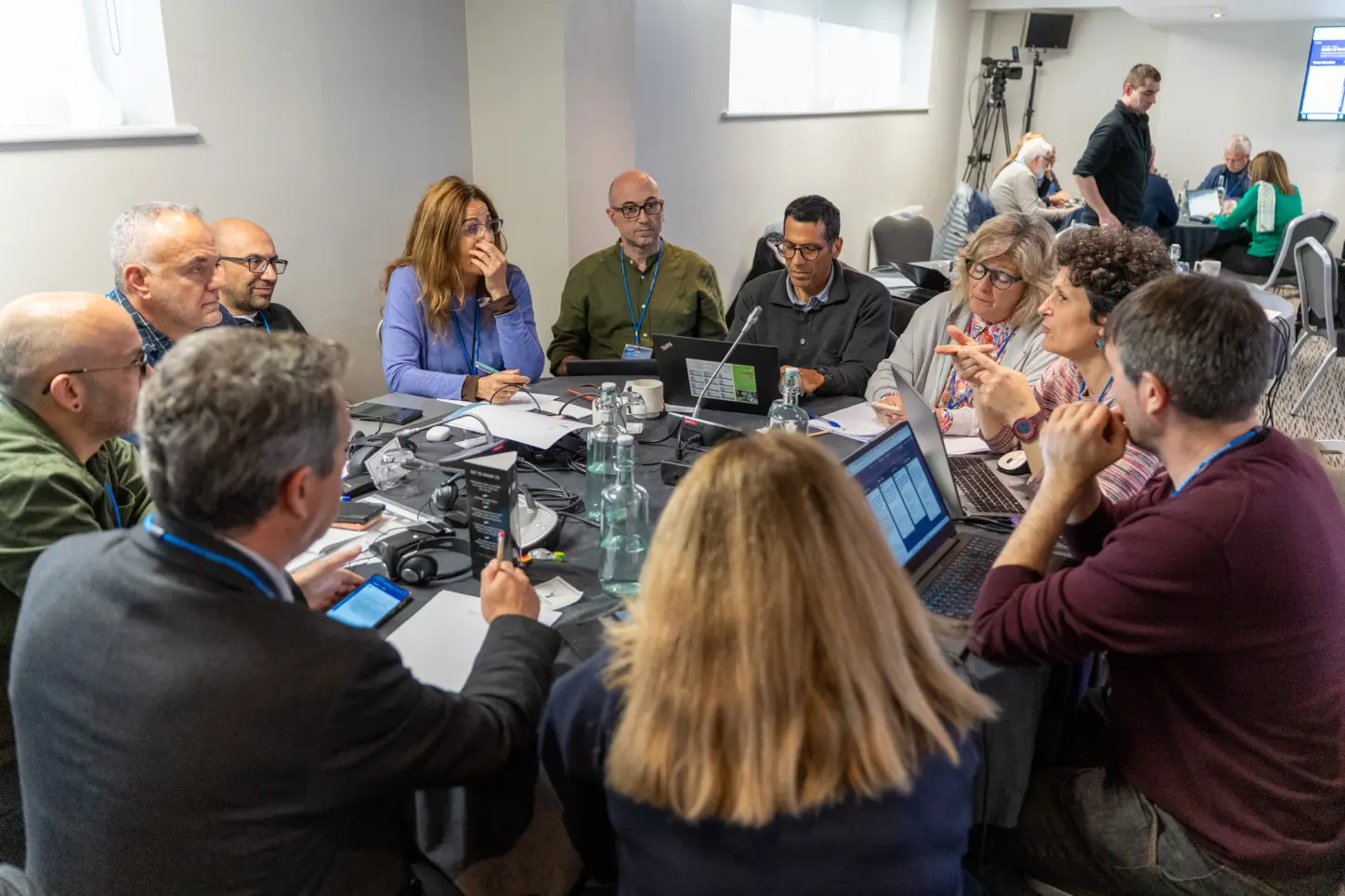
Building on the presentation of the findings of the ETUCE survey on AI by the external research experts, participants worked in groups to reflect on ETUCE survey findings and to discuss how collective bargaining and union action currently engage with AI-related challenges in education.
Building union power on AI
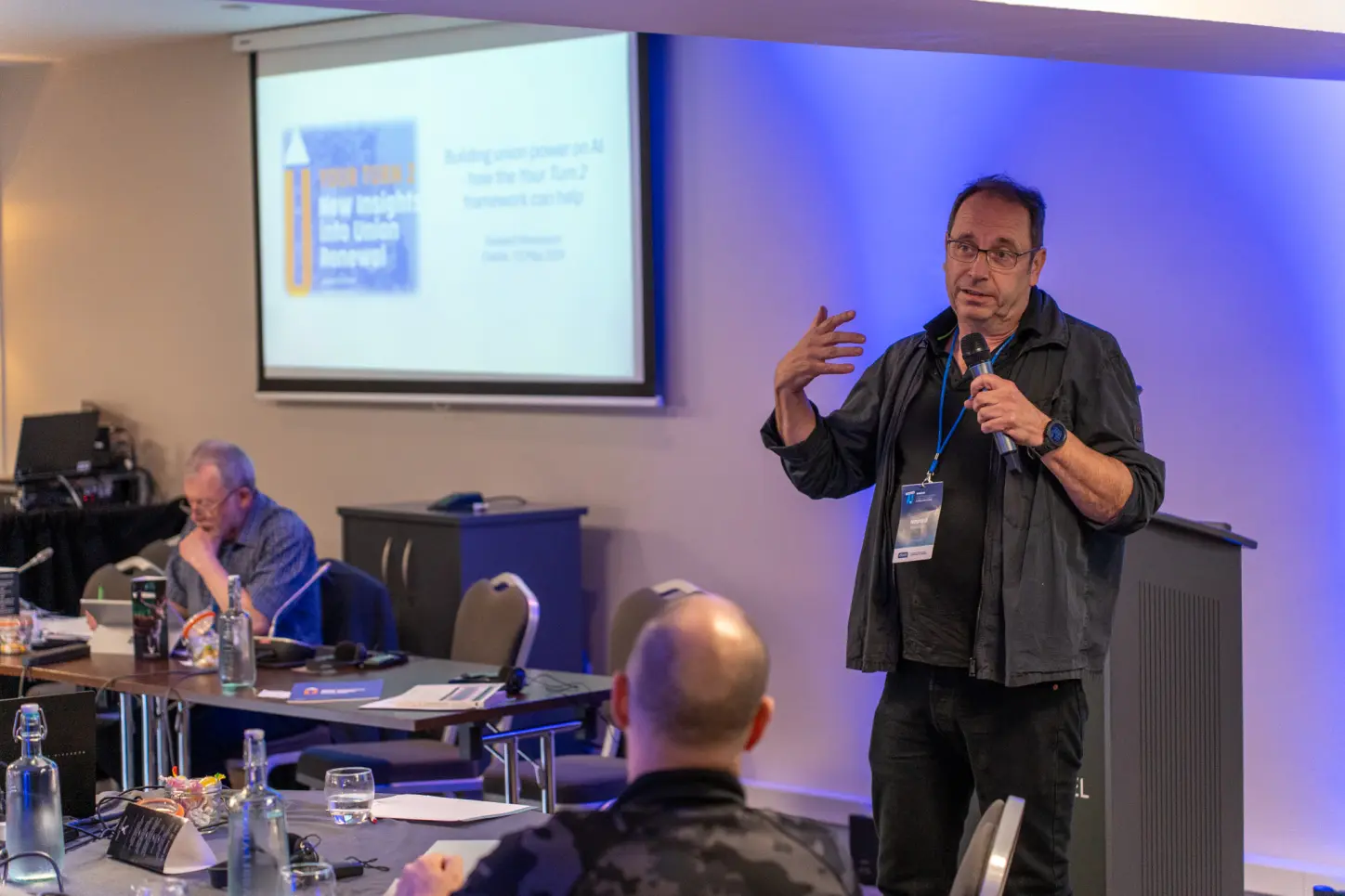
The final part of the workshop focused on how unions can organise strategically around AI, drawing on the Your Turn 2 framework.
Group discussions examined the presence of AI-related issues in existing collective agreements, differences across countries and regions, and the extent to which union work aligns with educators’ main requests. Participants also explored the difficulties of addressing AI through collective bargaining in decentralised systems and in contexts where social dialogue remains weak.
This part of the workshop aimed to support unions in identifying gaps, priorities and strategic questions for future action, and to reinforce the role of collective organisation in shaping how AI affects teachers’ work and professional autonomy.
Moving forward, education unions will focus on co-designing a European strategic Guide on union advocacy and collective bargaining on AI as well as an online mapping showcasing union collective bargaining and advocacy action on AI. These outcomes, along with the ETUCE Research Report on AI and Education, will be presented at the final conference of the project taking place on 25-26 November in Lisbon.