Young People and Education Staff in France Fight for More Resources
After 10 years of Emmanuel Macron’s education policies, marked by budget austerity, growing inequalities and reinforced social selection at all levels of the education system, it took less than a month after the start of the school year for education issues to trigger a major social movement across the country.
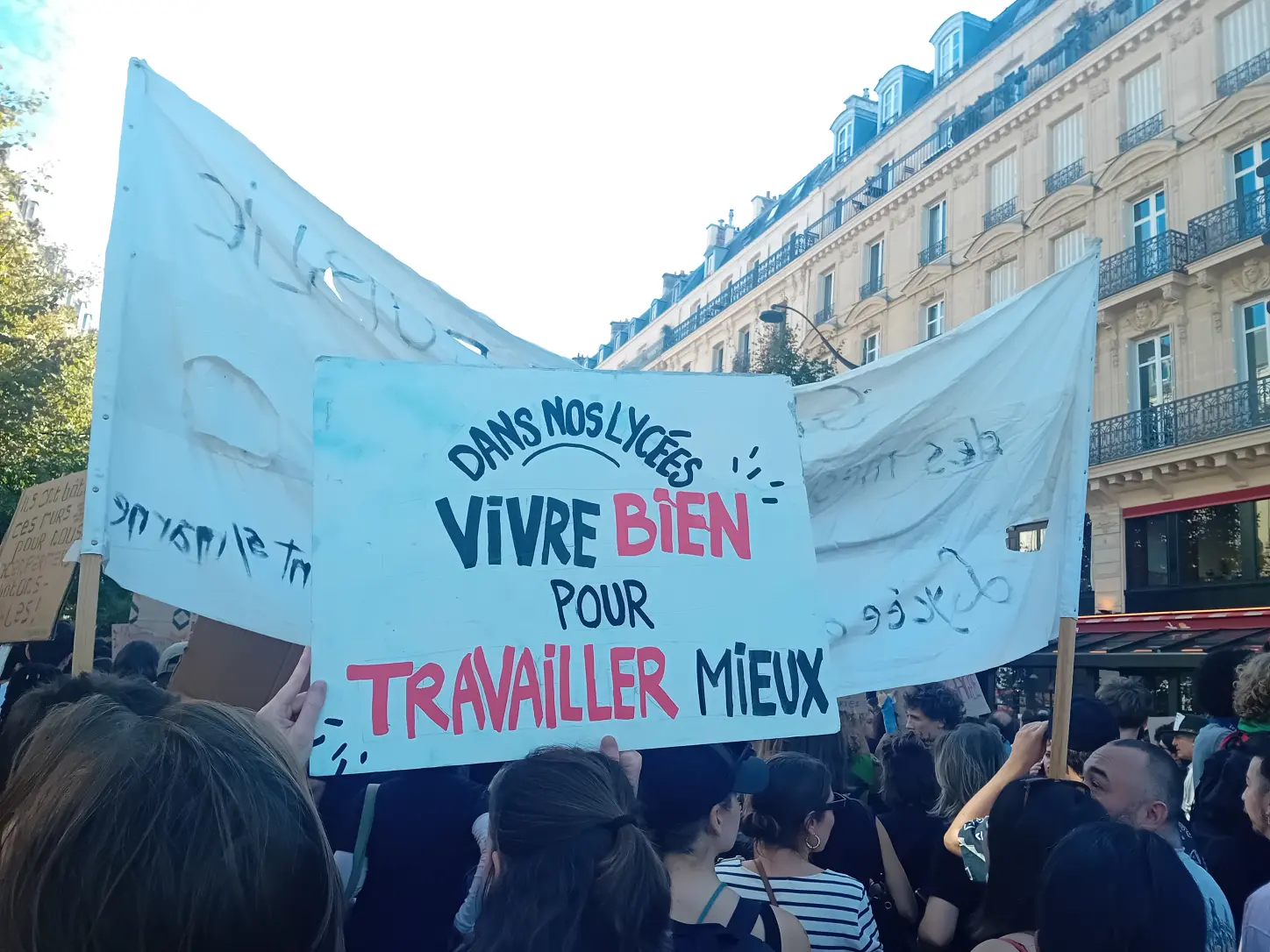
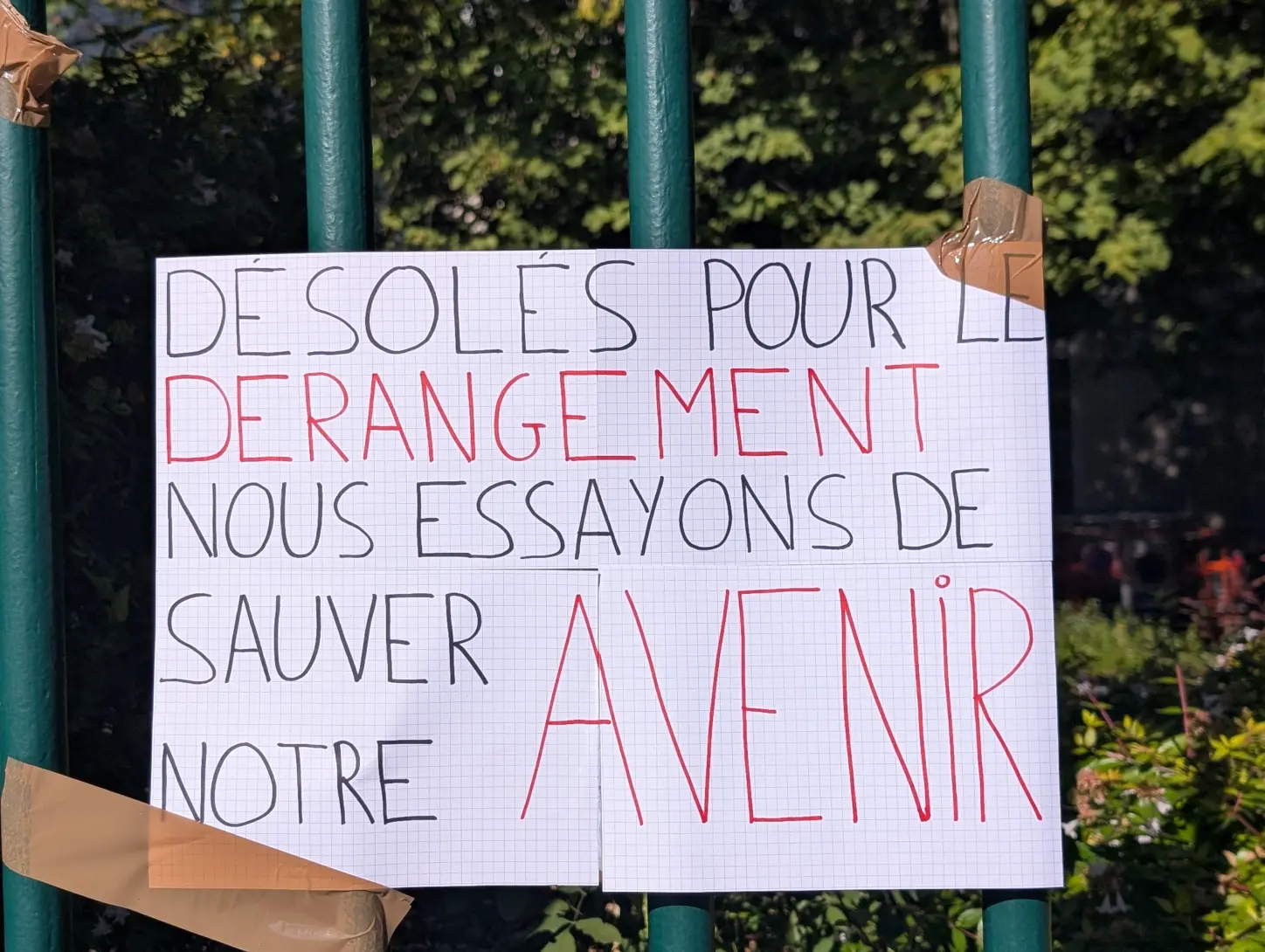
For just over two weeks, French secondary school students have been protesting against teacher shortages, overcrowded classrooms and the poor condition of school buildings. Opposition to the constant pressure generated by reforms of the Baccalauréat and upper secondary education also features prominently among young people’s demands. Since the introduction of continuous assessment, every grade obtained from the first year of upper secondary school onwards counts towards both the Baccalauréat and, above all, the Parcoursup platform, the tool used to select students for entry into higher education, thereby reinforcing social selection. Originating in the Seine-Saint-Denis department near Paris, one of the poorest areas in France, the movement quickly spread throughout the country. On 6 October, a national day of strike action and demonstrations, several hundred secondary schools were closed or blockaded, and protests brought together 450,000 people across France.
Unacceptable Repression
The first two weeks of the student movement were marked by significant repression. In just two weeks, 5,060 people were taken into police custody, including 4,400 minors. That is almost as many as during an entire year of the Yellow Vests movement, twice as many as during the movement against the First Employment Contract (CPE) in 2006, another major youth-led social movement, and 50 times more than in May 1968. Even more than the number of arrests, however, it is the disproportionate use of force by the police that has sparked outrage, resulting in serious injuries and permanent disabilities among students. In recent days, minors have lost numerous teeth, a hand or an eye. The use of police dog units, mounted police charges, point-blank grenade launcher fire, rubber bullet launchers and stun grenades demonstrates the scale of the arsenal deployed to silence young people. This unacceptable repression is all the more scandalous because it will leave deep scars. Many students interviewed say they no longer trust the police institution to protect them in the future.
Support from Teachers
Education trade unions, including SNES-FSU, have for years put forward demands that respond both to the expectations of education staff and to those of young people. Over recent years, they have warned political leaders about the harmful consequences of reforms to upper secondary education, the Baccalauréat and access to higher education, all of which are now being denounced by students. In representative bodies and on the streets, we have demanded pay increases and better working conditions to make education professions more attractive. We have opposed the massive cuts to teaching posts and overcrowded classrooms that discourage new recruits and drive young teachers away from the profession. We have also raised the alarm about the deteriorating condition of school buildings.
It is unacceptable that, in one of the wealthiest countries in the world, students are in some places forced to attend lessons wearing coats in winter, suffocate in overheated classrooms during heatwaves, hesitate to use school toilets, lack access to drinking water (as in Mayotte), or encounter pests in classrooms and school corridors. Convinced that it was right against everyone else, against the profession and against its trade union representatives, the government has imposed its policies forcefully and arrogantly for years on numerous issues. As Macron’s second term draws to a close, the education community is showing that it has forgotten nothing.
Taking Decisive Action
The French government will not overcome the current crisis through words alone or through a token consultation process. It can only do so by taking decisive action, some measures immediately and others in the coming weeks through the national budget process. It is time for the government to listen to the profession and its trade unions. SNES-FSU has put forward strong proposals for a different budget, a different vision for public secondary education and a comprehensive renovation of school infrastructure.
Among our key demands are the immediate recruitment of non-tenured teachers whose contracts were not renewed at the start of the school year, the cancellation of the 1,250 teaching post cuts included in the budget, and the introduction of a multiannual staffing plan to restore the 10,230 posts eliminated since 2017 in secondary schools, thereby reducing class sizes. It is also essential to reverse the latest pay freeze, the thirteenth since 2010, increase by 20% the index point used to calculate civil servants’ salaries, and establish a national salary scale for contract teachers in order to end territorial inequalities. Support staff must not be forgotten either: we demand a national salary scale for education assistants (AEDs) and full civil servant status for support staff assisting pupils with disabilities (AESH).
To rethink secondary education, SNES-FSU is calling in particular for the abolition of the Grand Oral examination, a highly discriminatory assessment, the end of continuous assessment, the restoration of final, anonymous and nationwide examinations, the abolition of Parcoursup, and an increase in places in public higher education. The organisation of upper secondary education and the Baccalauréat must be fundamentally redesigned.
With regard to school buildings, SNES-FSU proposes an investment plan worth €5 billion over ten years, ensuring that public funds are reserved for public education.
All these measures require massive investment in public education. Public services have already been sacrificed enough. The government must change course and secure the necessary resources from those best able to contribute to the national effort. Here too, solutions exist and are already on the table, including the Zucman tax, taxes on the excess profits of major energy companies and a comprehensive review of the €211 billion in annual public subsidies granted to businesses.